
From genetic perturbation to drug safety: Sam Moix’s internship at Open Targets
Building scalable and reproducible research workflows
I recently spent three months interning with the Open Targets core team in Hinxton. My work as a PhD candidate in the Department of Computational Biology at the University of Lausanne, focuses on drug target prioritisation and on estimating drug perturbation profiles from large-scale biobank data.
My time at Open Targets, working with a team at the forefront of large-scale biomedical data integration, was both scientifically and personally rewarding. I learned a great deal about large-scale data processing, reproducible research, human genetics, and the challenges of translating genetic evidence into biologically meaningful insights for drug safety. One of the things that particularly stood out to me was the team’s ability to handle large and complex datasets while maintaining a strong commitment to reproducible research.
During my time there, I learned how to work more effectively with Google Cloud, Dataproc, Docker, GitHub workflows, and pipeline orchestration tools. These tools are increasingly important for scalable research, but are still probably underused in many academic settings. Seeing how they are applied in production-level scientific pipelines was extremely valuable and gave me a clearer view of how computational biology can move from exploratory analysis to robust, reusable research infrastructure.
A scientific hub in human genetics
The setting of Open Targets also made the experience particularly valuable. The Wellcome Genome Campus may at first feel somewhat remote, but it is a major scientific hub, bringing together leading researchers in genetics, molecular biology, and drug discovery. This created many opportunities to interact with scientists working at the forefront of their fields and to learn from expertise extending well beyond my own projects.
These interactions were especially helpful for strengthening my biological understanding of drug mechanisms, disease risk, and adverse effects. Beyond the technical aspects of large-scale data analysis, the internship gave me a clearer view of how deep biological knowledge and genetic evidence can be combined to support target discovery and safety assessment.
Using genetic perturbation to study adverse drug reactions
During my internship, I worked on updating and extending the Variant-Informed Dose Response Analysis (VIDRA) pipeline, originally developed by the Trynka Lab at the Wellcome Sanger Institute. VIDRA is a method based on allelic series that uses genetic evidence to estimate the direction of effect of protein-coding genes on disease traits.
We used these dose-response estimates as part of a pilot safety-focused project aiming to better understand the molecular pathways underlying adverse drug reactions. Building on VIDRA and the Open Targets Platform, the project explored whether genetically informed perturbation profiles could help anticipate side effects of commonly prescribed drugs, including statins, ACE inhibitors, and metformin. The study focused on integrating drug–gene and gene–trait associations to link molecular perturbations to adverse outcomes.
Although preliminary, the results were promising. One encouraging example involved ACE inhibitors and angioedema, a known adverse effect of this drug class. The method prioritised angioedema with a high side effect score, supported by evidence involving BDKRB1 and BDKRB2 from colocalising eQTL signals. This is biologically meaningful, as bradykinin signalling is known to be involved in ACE inhibitor associated angioedema. The fact that the approach recovered a known and mechanistically plausible adverse reaction suggests that genetically informed perturbation profiles may help prioritise side effects in a more interpretable way.
These results provide a foundation for future work on drug safety. More broadly, they suggest that integrating genetic perturbation, drug–gene relationships, and harmonised phenotypic data could support scalable and mechanistically informed prediction of adverse drug reactions.
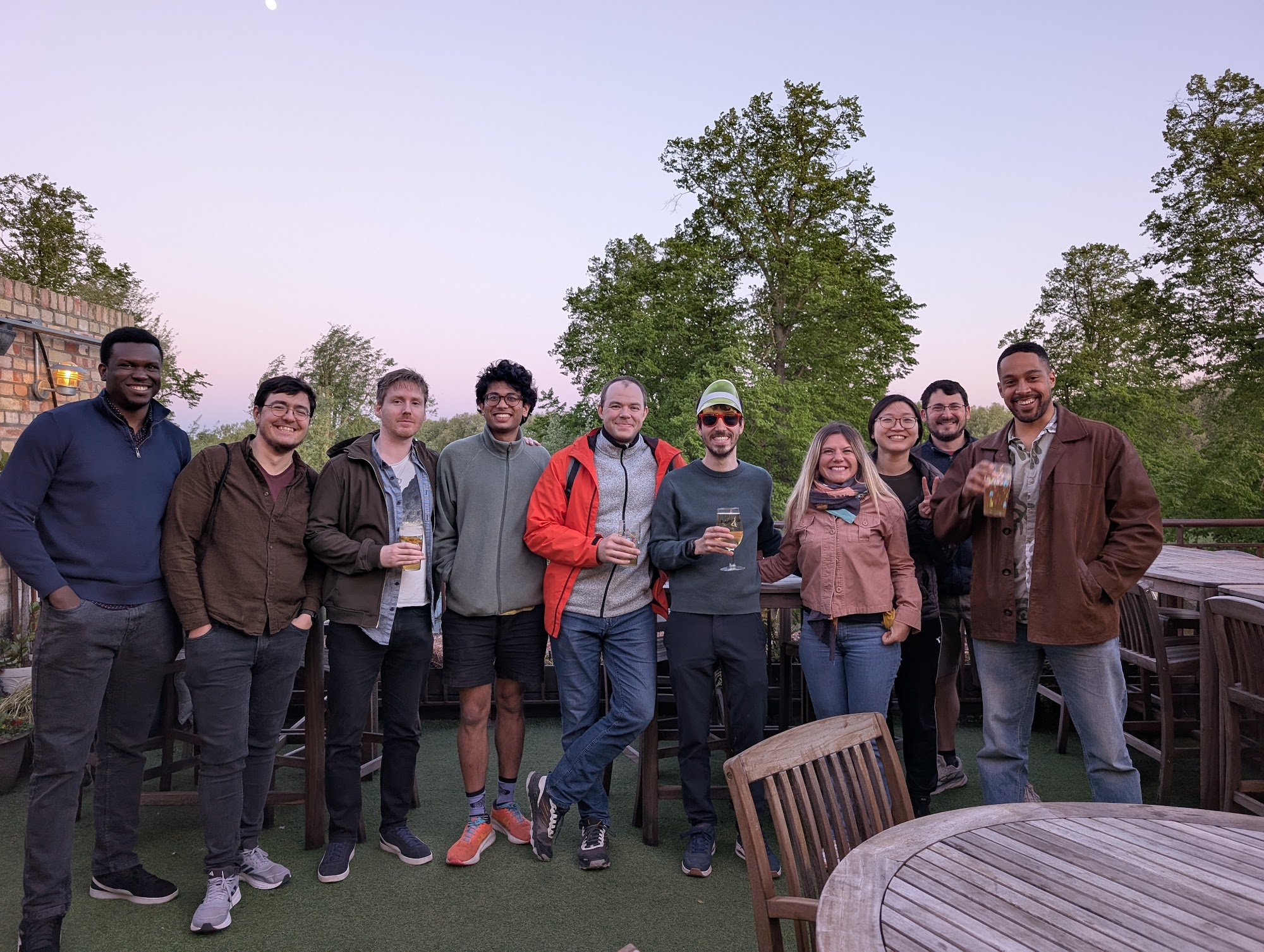
I am very grateful to the whole Open Targets team for their warm welcome, support, and willingness to share their expertise throughout the internship. I also thank the team at the University of Lausanne for their continued support during these three months.
Life on the Wellcome Genome Campus was memorable in many ways. I was unexpectedly lucky with the British weather, with sunshine accompanying most of my daily cycling commute to campus, often alongside the memorable calls of pheasants echoing from the surrounding fields.
Finally, I would especially like to thank EMBO for supporting this exchange through an EMBO Scientific Exchange Grant. This funding made it possible for me to spend time at Open Targets, gain this experience, and bring back new skills, perspectives, and ideas to the University of Lausanne.