Open Targets Platform 26.09 has been released!
The latest release of the Platform — 26.09 — is now available at platform.opentargets.org.
Key points
This release includes:
- 1.24 million additional molecular QTL credible sets following updates from GTEx, and the addition of two new datasets (IBDverse, MAGE), uniformly processed through the eQTL Catalogue
- A regular update from the GWAS Catalog that adds almost 15,000 new studies
- New gene burden datasources: BRaVa consortium and Genes & Health, together contributing over 10,000 evidence records
- For the first time, gnomAD has genetic constraint data for X- and Y-linked genes
- Plus a number of data enhancements and engineering improvements, and a new Platform metrics page
For the full list of updates, take a look at the release notes. For a list of key stats and metrics, see our new metrics page.
A major increase in functional genomics data
This release includes 1.24 million additional molecular QTL (molQTL) credible sets, following a major update to GTEx v10, and the addition of two new dataset—IBDverse and MAGE—which were uniformly processed through the eQTL Catalogue pipelines.
IBDverse
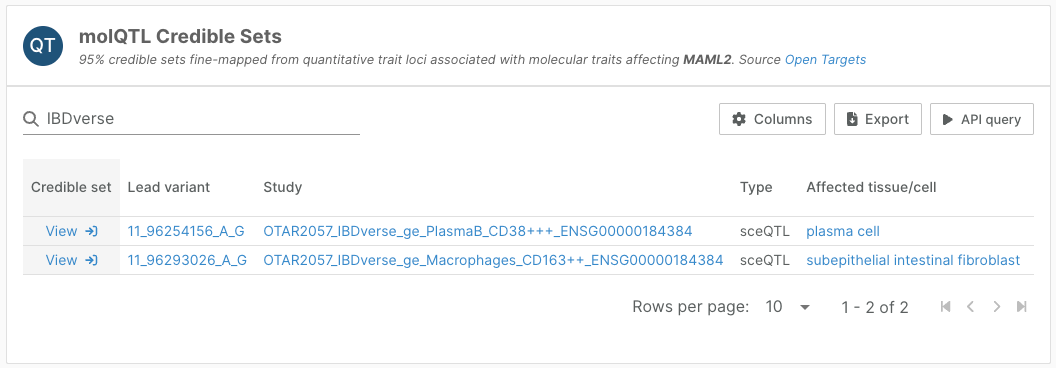
We’ve included single-cell eQTLs from Alegbe et al. (Nature, 2026), the largest collection of single-cell RNA sequencing data from Inflammatory Bowel Disease (IBD)-relevant sites (terminal ileum, rectum, blood), using data from over 400 individuals including 125 with IBD. Their analysis nominates effector genes and cell types at over half of known IBD loci, including 74 for which this is the first candidate effector gene.
The IBDverse data—the result of an Open Targets project—contributes over 70,900 credible sets in 42 cell types and contexts to the Platform, adding cell-type resolved support for IBD gene associations.
MAGE
MAGE is an open resource for multi-ancestry analysis of gene expression. Taylor et al. (Nature 2024) published an RNA sequencing dataset of lymphoblastoid cell lines from 731 individuals in the 1000 Genomes project.
We’ve integrated eQTLs and sQTLs from 731 individuals across 26 populations and 5 continental groups, contributing over 56,000 credible sets, and adding ancestrally diverse expression data to the Platform.
Data updates
GWAS Catalog update provides the first genetic support in the Platform for Casgevy
The GWAS Catalog update adds 14,690 studies and 44,859 credible sets from 143 publications.
These include six studies on sickle-cell/fetal haemoglobin (HbF). In particular, a new african-ancestry GWAS of fetal-haemoglobin levels in sickle-cell anaemia from Wonkam et al. (Nature Communications, 2025) fine maps to BCL11A, providing the first genetic support for the therapeutic hypothesis underpinning Casgevy (exagamglogene autotemcel—the first approved CRISPR therapy), that disrupting the BCL11A erythroid enhancer reactivates fetal haemoglobin to treat sickle cell disease.
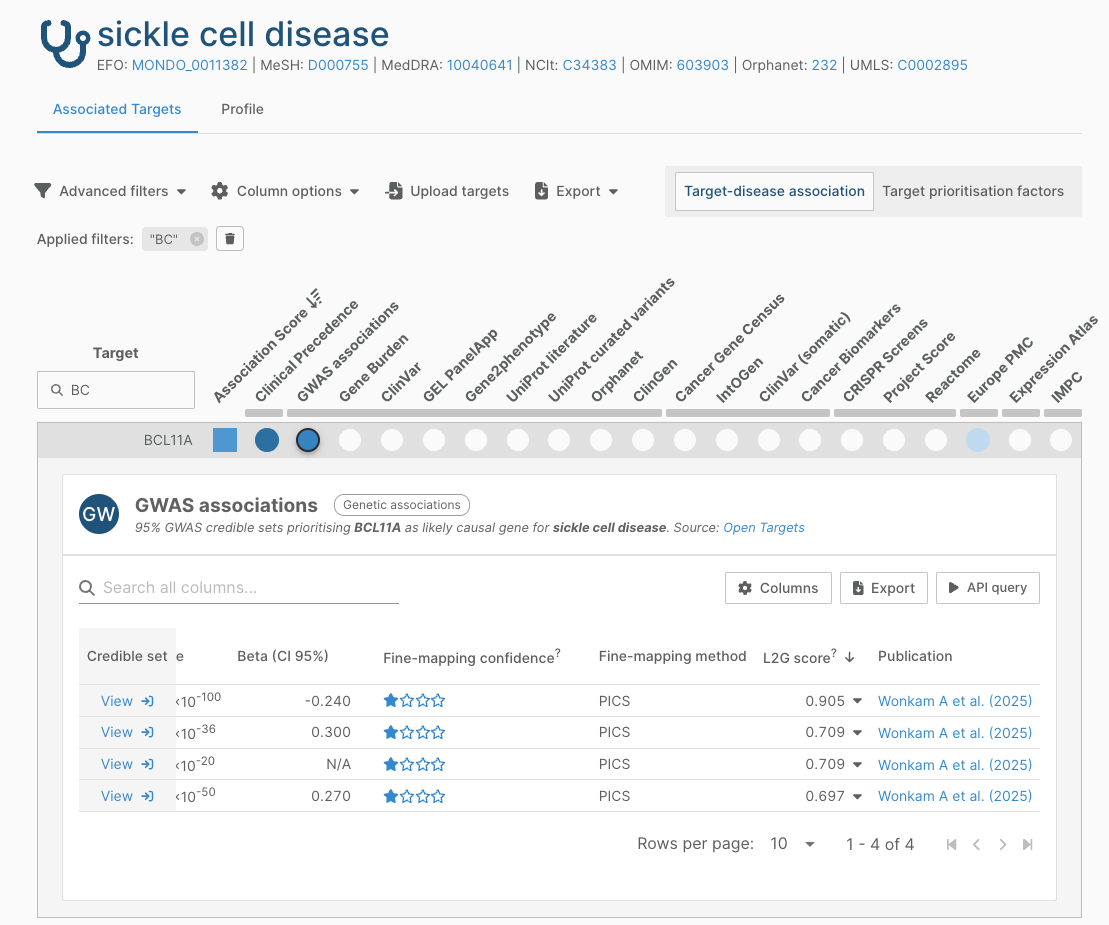
Among other publications of note from the GWAS Catalog update, we now incorporate a consensus meta-analysis of Alzheimer’s disease (EADB 2026, Nature Genetics) and a multi-ancestry endometriosis GWAS (Koller 2026, Nature Genetics).
New gene burden datasources: BRaVa Consortium and Genes & Health
We have incorporated two new sources of burden evidence, contributing over 10,000 evidence records across 543 targets and 107 diseases.
The Biobank Rare Variant Analysis (BRaVa) consortium is a global rare variant association resource integrated across 10 biobanks: UK Biobank, All of Us, Genomics England, Colorado Center for Personalised Medicine Biobank, Mass General Brigham Biobank, Penn Medicine Biobank, Genes & Health, BioMe, Biobank Japan, and Estonian Biobank. The resource integrates whole genome and exome sequencing data from around 1.2 million individuals across diverse ancestry groups.
We have processed results from two types of gene-based meta analyses: granular analyses consisting of individual mask and statistical method combinations, and Cauchy combination results aggregated across masks and statistical methods.
This new data contributes 9,098 evidence records across 429 targets and 48 diseases, spanning European, African, Central/South Asian, East Asian, and Admixed American ancestries.
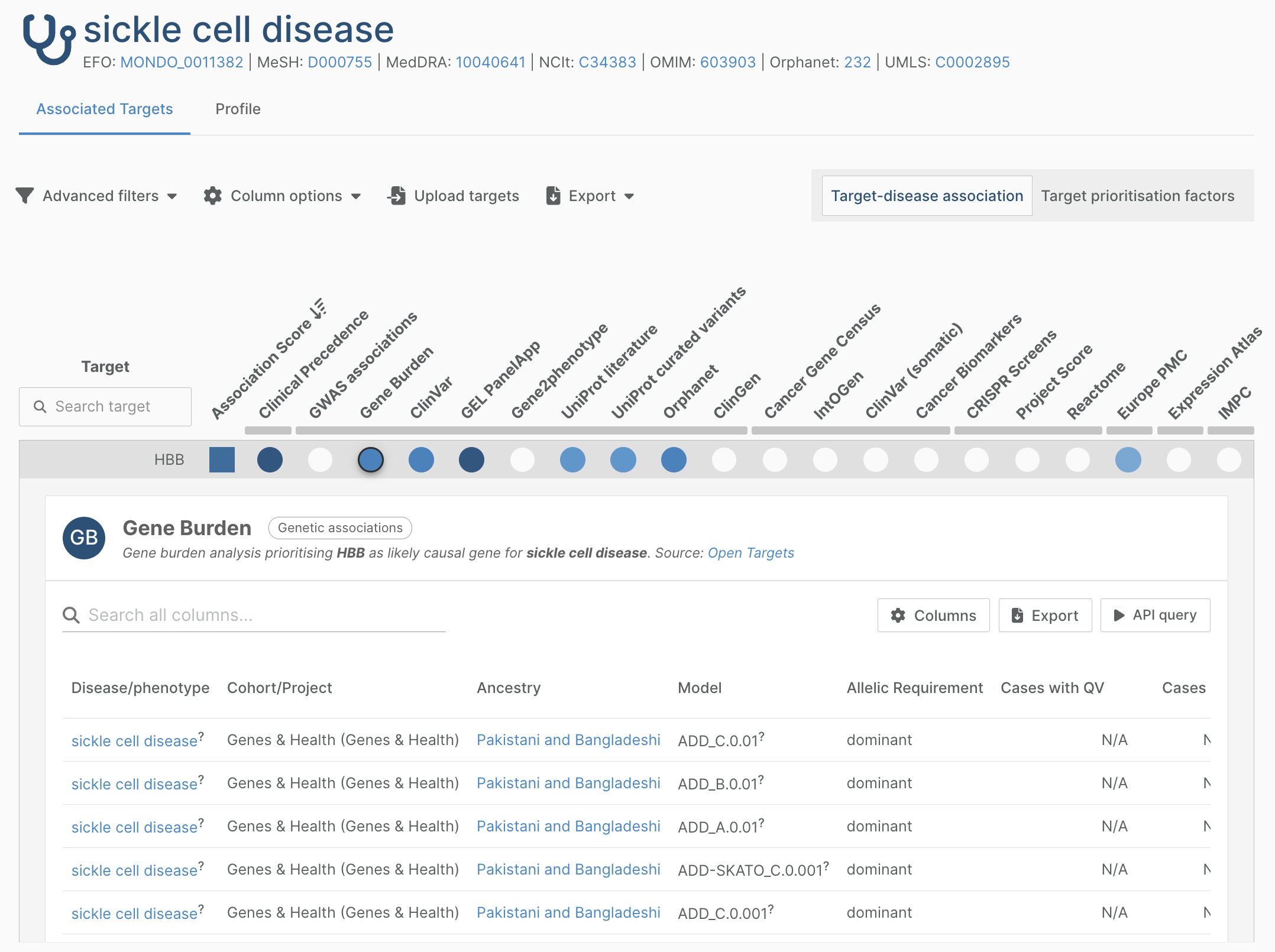
The Genes & Health (G&H) study performed whole-exome sequencing in over 44,000 British-Pakistani and Bangladeshi individuals enriched for autozygosity. We processed the results of exome-wide association analyses using additive and recessive models. We also processed the results from meta-analyses of cardiometabolic traits between the G&H individuals and over 400,000 individuals of European ancestry from UK Biobank.
This contributes 1513 evidence records across 184 targets and 73 diseases.
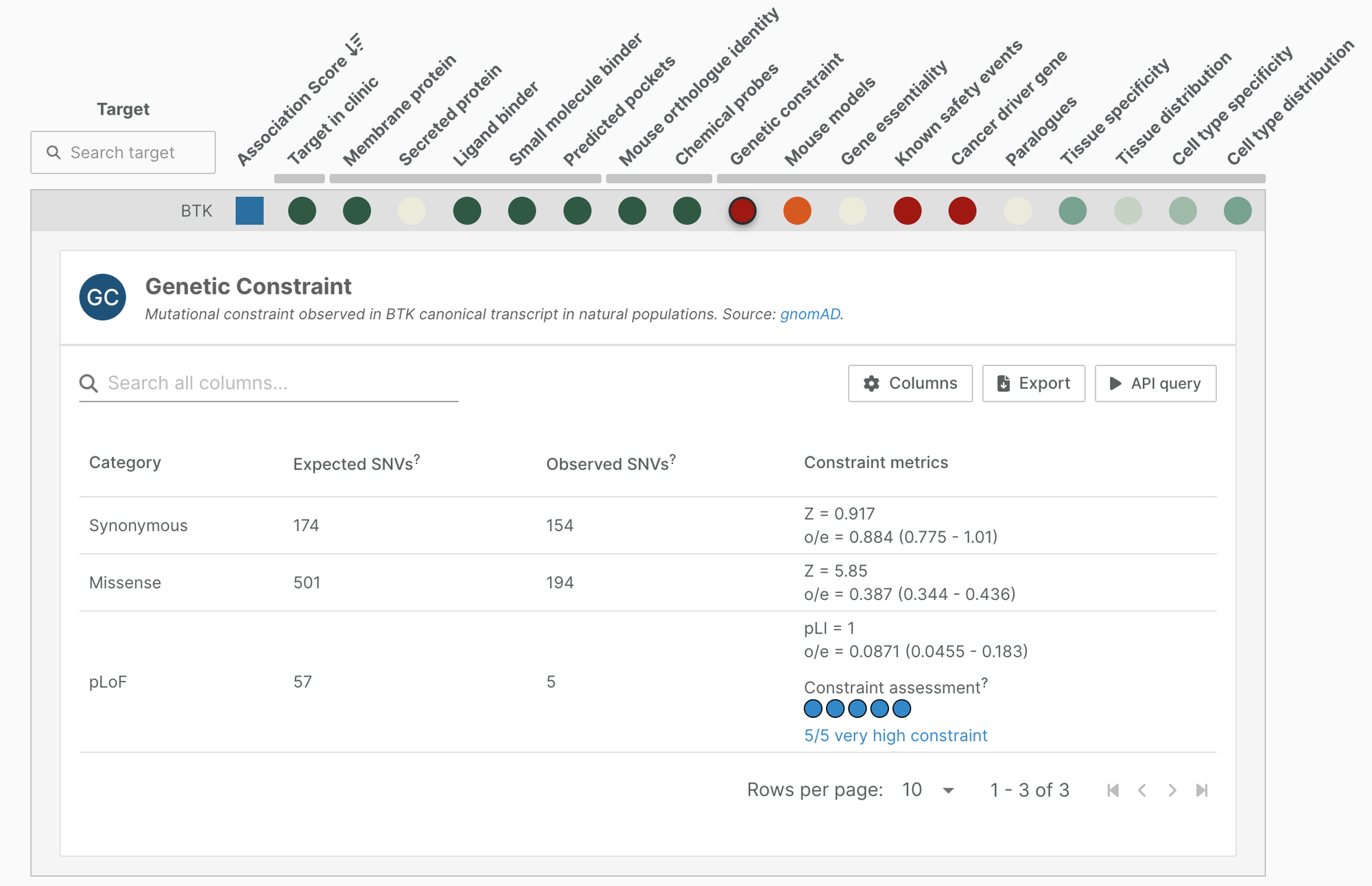
Updated genetic constraint from gnomAD includes X and Y chromosomes
Canonical transcripts in gnomAD v4.1.1 now include X and Y chromosomes. This means that 792 X-chromosome genes now have genetic constraint information, including some well-known drug targets.
Data enhancements
Improved handling of exome- and genome-sequencing studies
We realised that exome- and genome-sequencing GWAS were failing quality control, because our criteria were tuned for array-based studies. We have therefore relaxed the thresholds for such studies, and now capture genetic signals from ExWAS and WGS-flagged studies. This includes large cohorts such as the UK Biobank and Genes & Health.
Additionally, studies now carry richer flags, including analysis type flags (e.g. metabolite, ExWAS,...) and quality control flags (e.g. missing case/control counts, SNP count below the expected threshold…), and we have flagged quality metrics including SNP heritability on the study and credible set pages.
Richer clinical evidence
We’ve enriched annotations to the clinical reports in the Platform, including:
- Adding a trial sponsor for each trial,
- Adding dates to the EMA and PMDA approvals, derived from the clinical-report year when it is available,
- Cleaner reference-typed literature links.
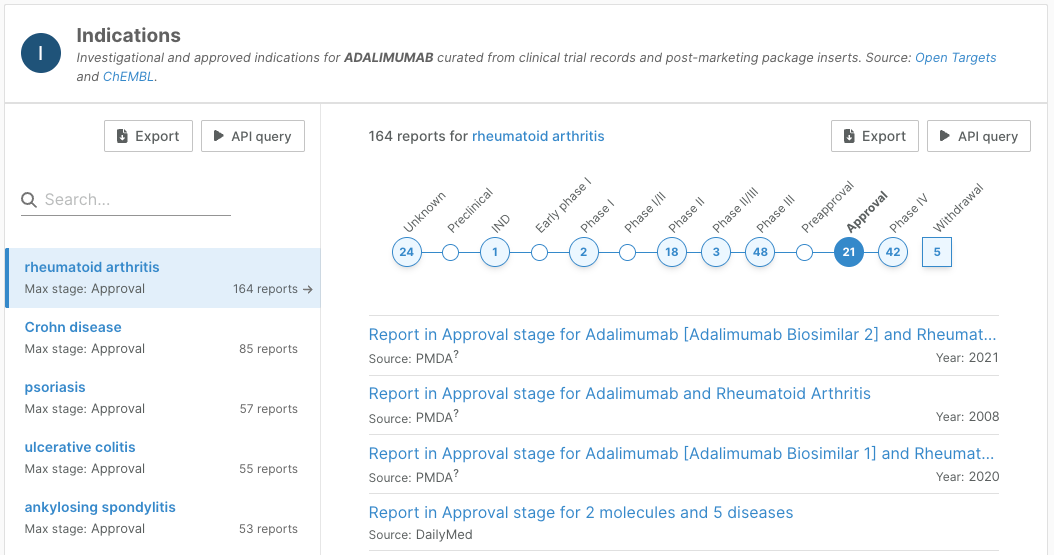
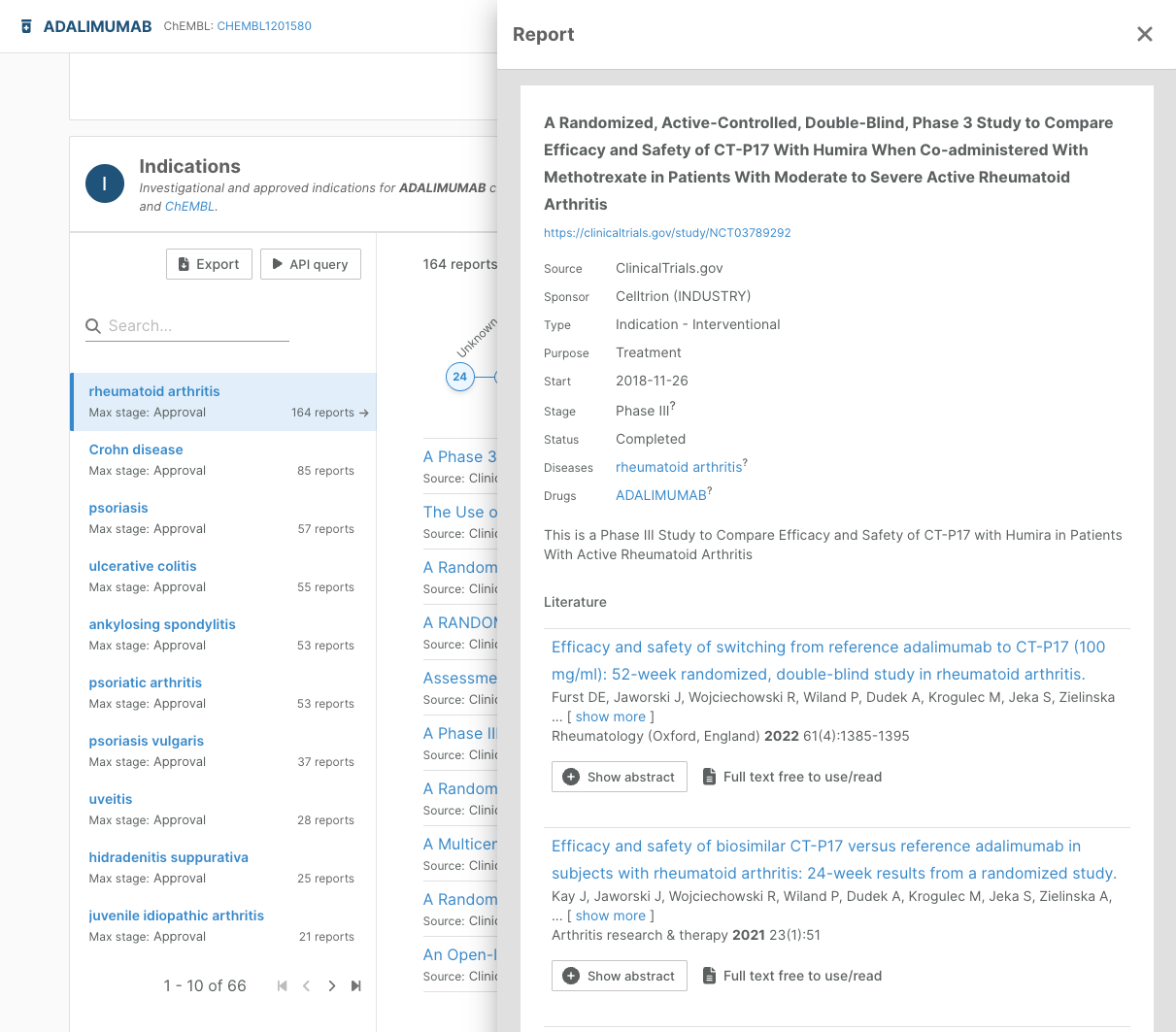
The indications widget for ADALIMUMAB now shows richer annotations for clinical reports, including the year of approval where available (left), and for individual reports, the trial sponsor (right).
De-duplication of disease terms
Platform users have reported that some disease/phenotype terms are duplicated (e.g. obesity, hypertension, stroke) due to differences in how the terms were described across multiple ontologies. We have added a cross-ontology de-duplication step to our pipeline that merges disease terms from different ontologies.
In this release, this step coalesces 1,706 duplicate terms and consolidates over 3 million evidence records into a single term.
Engineering improvements
We have made a number of engineering updates in this release, including:
- We updated the version of Material UI used in the web app, modernising the component library for a more consistent and accessible interface.
- Profile pages have a redesigned navigation to make moving between sections and widgets easier.
- Creating a monorepo for our data pipelines: previously separate components were consolidated into a single repo to simplify maintenance, testing, and releases.
- We moved our infrastructure to a GitOps-style continuous deployment with ArgoCD, making releases more reliable and reproducible.
- We moved the ChEMBL feed from Elasticsearch to PostgreSQL, which means that users can now re-run our ChEMBL pipeline themselves.
Metrics page
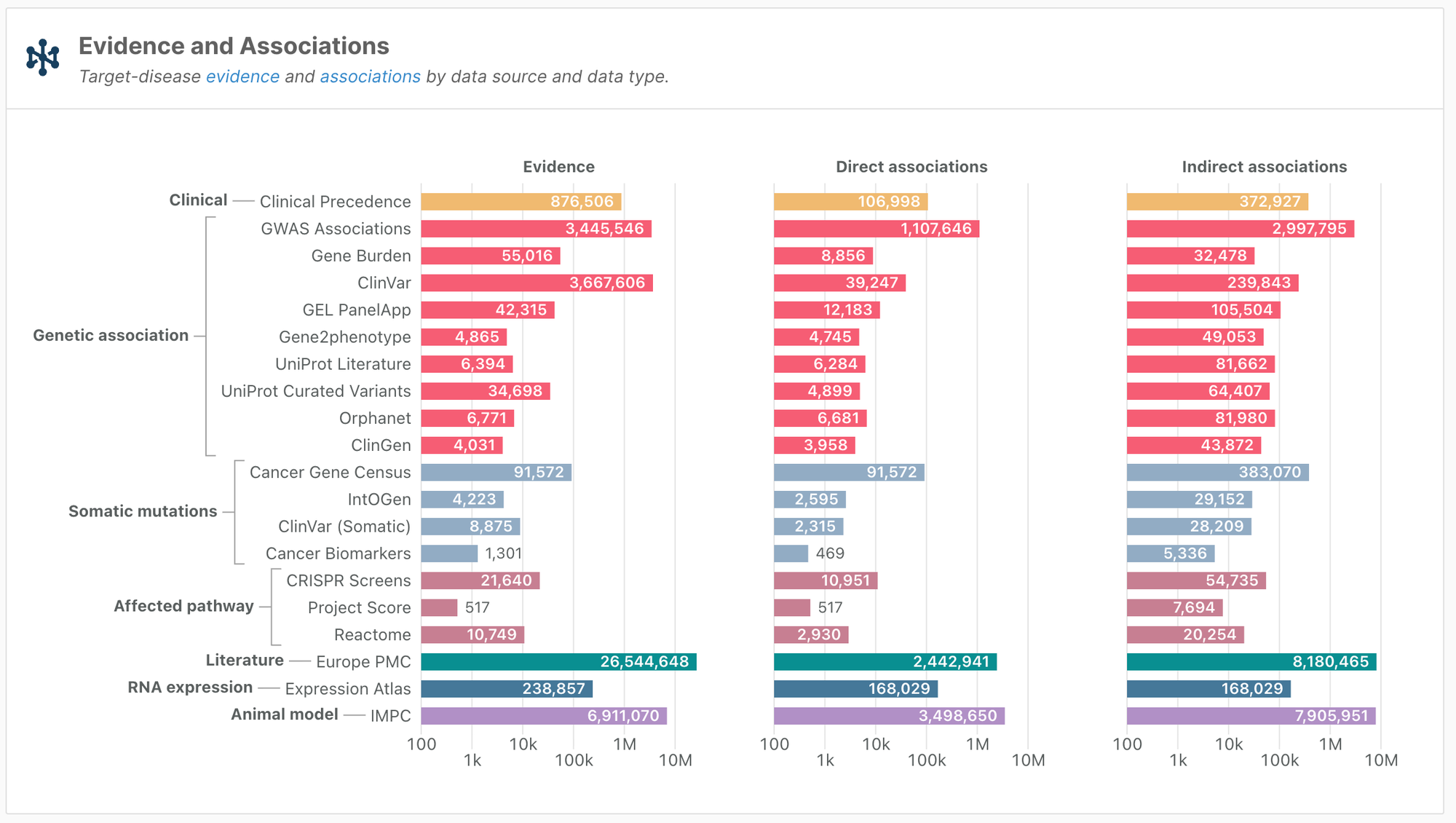
We now have a metrics page to showcase our headline release metrics: targets, diseases, drugs, studies, credible sets, evidence, variants, prioritised genes, and colocalisations.
The page also includes a breakdown of:
- Target-disease evidence and associations by data source and data type
- Drugs, clinical candidates and clinical reports by stage
- Studies, credible sets, and colocalisations by type
- Phenotype-associated variants by most severe consequence.
If you have any comments, questions, or suggestions, please share them with us on the Open Targets Community.