How Open Targets bridges academic science and pharmaceutical expertise
Open Targets was founded to foster close dialogue between pharmaceutical companies and academic research institutes to accelerate discovery research and the development of therapies. The resulting unique partnership model influences the scientific aims, project structures, and working culture of the consortium.
This is the first part in a set of posts that look back at how the partnership has evolved since its inception and how it may evolve in the future. The accompanying piece features our interview with project lead Muzlifah Haniffa, Deputy Director and Head of the Cellular Genomics Programme at the Wellcome Sanger Institute, describing the process of setting up her first Open Targets project.
 Helena Cornu
Open Targets projects are collaboratively designed
In consultation with the senior leadership, comprising academic and industry representatives, Open Targets regularly announces calls for project ideas centred on a theme important for drug discovery.
Senior scientists at the academic institutes and industry partners submit project ideas, which are then further refined, developed, and discussed in workshops within the Open Targets Consortium. Every partner has the opportunity to contribute to all project ideas, leveraging collective expertise to develop the most informative and impactful projects.
“I remember our first meetings back in 2014—the budget was much smaller, the team was tiny, and most projects were led directly by the leadership team and the academic partners,” recalls Mathew Garnett, Senior Group Leader at the Wellcome Sanger Institute, Open Targets project lead, and member of the Open Targets Governance Board. He was among the very first group leaders to receive an Open Targets project award.
“Today, we have a much stronger and more balanced system, with pharmaceutical partners contributing at an earlier and more sophisticated stage,” says Mathew. “It’s exciting to see project ideas coming in almost equally from academia and industry—a shift that has evolved over time. With more partners around the table, we also benefit from a greater diversity of perspectives, and finding areas of consensus helps us pinpoint where projects can deliver the greatest impact.”
Open Targets was founded in 2014 as a partnership between EMBL’s European Bioinformatics Institute, the Wellcome Sanger Institute, and GSK. Over the years, the consortium has grown and attracted more industry partners. The consortium now also includes Genentech, MSD, Pfizer, and Sanofi.
“There isn’t anywhere else in the world where you’ve got genomics, computational, clinical, biological, and pharmaceutical expertise all in one group or consortium,” says Muzlifah Haniffa, Open Targets project lead, Deputy Director and Head of the Cellular Genomics Programme at the Wellcome Sanger Institute, and Clinical Professor of Dermatology at the University of Cambridge.
“With this number of partners, there is a levelling phenomenon which makes the whole relationship feel much more equal.”
Projects are also more integrated. Sixty-six percent of active Open Targets projects involve collaborations across academic teams, 22% of projects collaborate across partner academic institutes, and 32% involve external collaborators. Within industry partners, projects can bridge different areas internally, bringing people together within their own company.
“Open Targets has had the single biggest impact in integrating the Sanger Institute and EMBL-EBI science, above and beyond any other initiative I’ve seen in that time,” says Mathew. “There’s been a deeper collaboration, even within Sanger alone, as it brought faculty groups across programmes to collaborate together on shared goals–translating their research findings to advance drug discovery.
Open Targets has deepened my understanding of what it takes to take basic or translational science and convert that into a drug discovery effort. Ultimately, it has made my work more translationally focused, and with clearer outputs that are more likely to yield interesting targets that could be pursuable in an industry setting.”
Academic-industry collaboration in practice
Open Targets projects bring together the creativity and innovation of academia with the pharmaceutical sector’s focus on identifying new drug targets and understanding disease mechanisms to drive the development of new therapies. This collaborative model fosters idea generation through collective effort, with partners working together to discuss findings and interpret results. “The innovation and creativity that exist in an academic environment can create opportunities that are really phenomenal if properly leveraged and focused,” says Mathew.
Operating in a pre-competitive space also makes it more cost-effective for partners to invest in a single Open Targets project rather than duplicate the same research in separate industry settings. The projects themselves are ambitious and forward-looking—applying cutting-edge techniques, developing novel methods, and often running at a scale that would be impossible without this kind of collaboration.
“Our collaboration allows us to both innovate and reduce risk for pharmaceutical companies,” explains Mathew. “Together, we can assess the value of a new technology and work out how to deploy it in ways that are genuinely useful.”
Since 2014, Open Targets has launched nearly 100 projects, with budgets ranging from £0.5 million to £11 million. What began with the scrappy, start-up energy of the first project calls has matured into a well-established and structured process.
“Open Targets provides excellent administrative support,” says Muzlifah Haniffa. “The whole process runs like a well-oiled machine. The team is incredibly supportive, offers excellent advice, and that has made a difference.”
Muzlifah is now three years into her first Open Targets project, which analyses patient data from the Beacon Trials to identify early molecular changes in patients that could improve the treatment of atopic eczema.
“Working through Open Targets has allowed us to partner with exactly the right people, without constraints,” Muzlifah explains. “This kind of collaboration creates a real sense that we can accelerate progress toward clinical translation—moving faster and more effectively thanks to the breadth of expertise from many different disciplines.”
Project progression
Once a project is underway, all partners remain actively engaged through regular meetings and open dialogue with project teams. Weekly lab meetings provide a forum for sharing progress, troubleshooting challenges, and spotting opportunities for cross-project collaboration. Throughout the year, the consortium comes together through focused events to exchange ideas, build connections, and explore emerging scientific questions. Thematic events—such as our Ctrl-Alt-Del forum on genetic perturbation screens—connect researchers working at the forefront of technology, reinforcing our substantial portfolio of CRISPR-based projects.
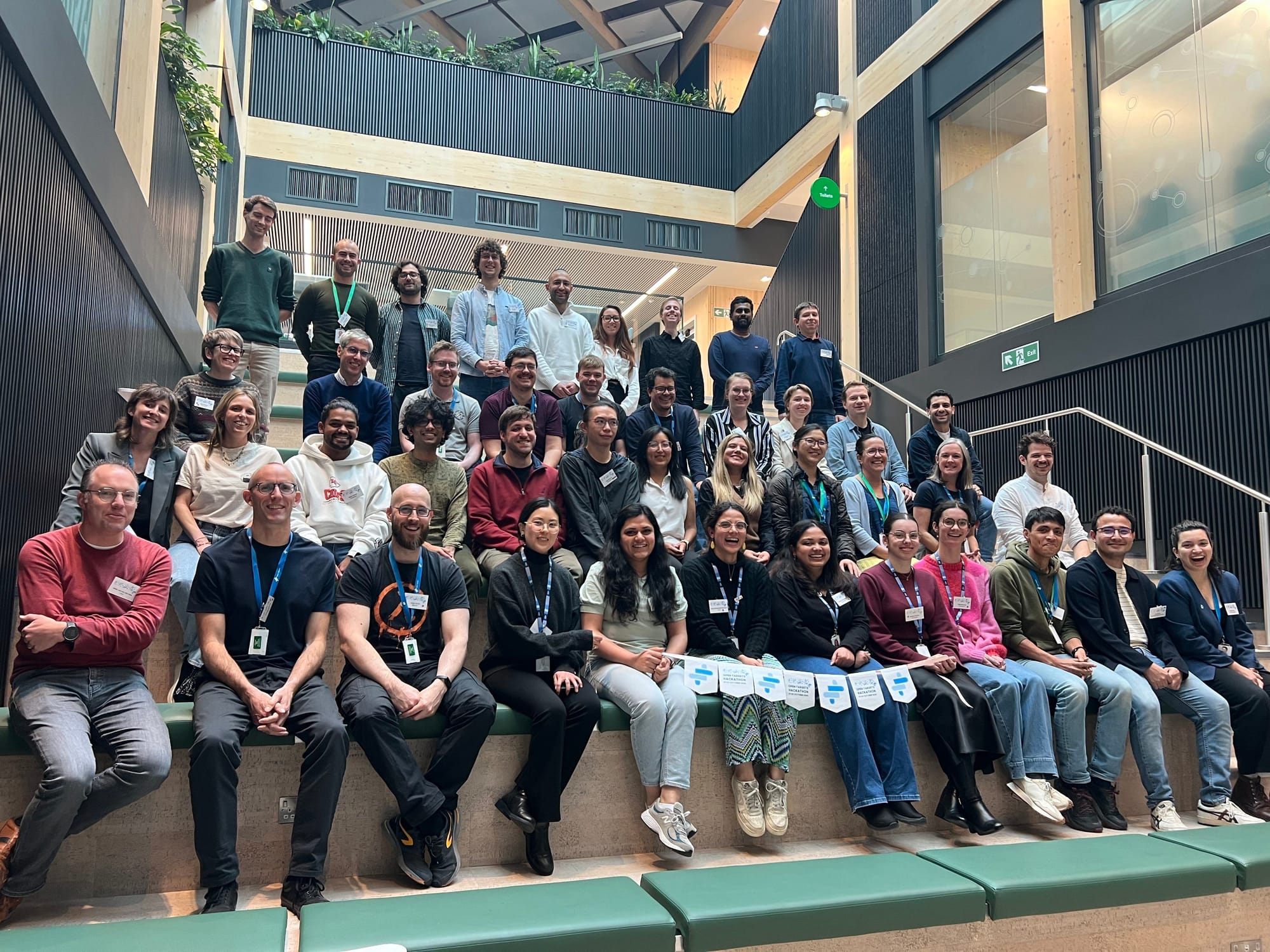
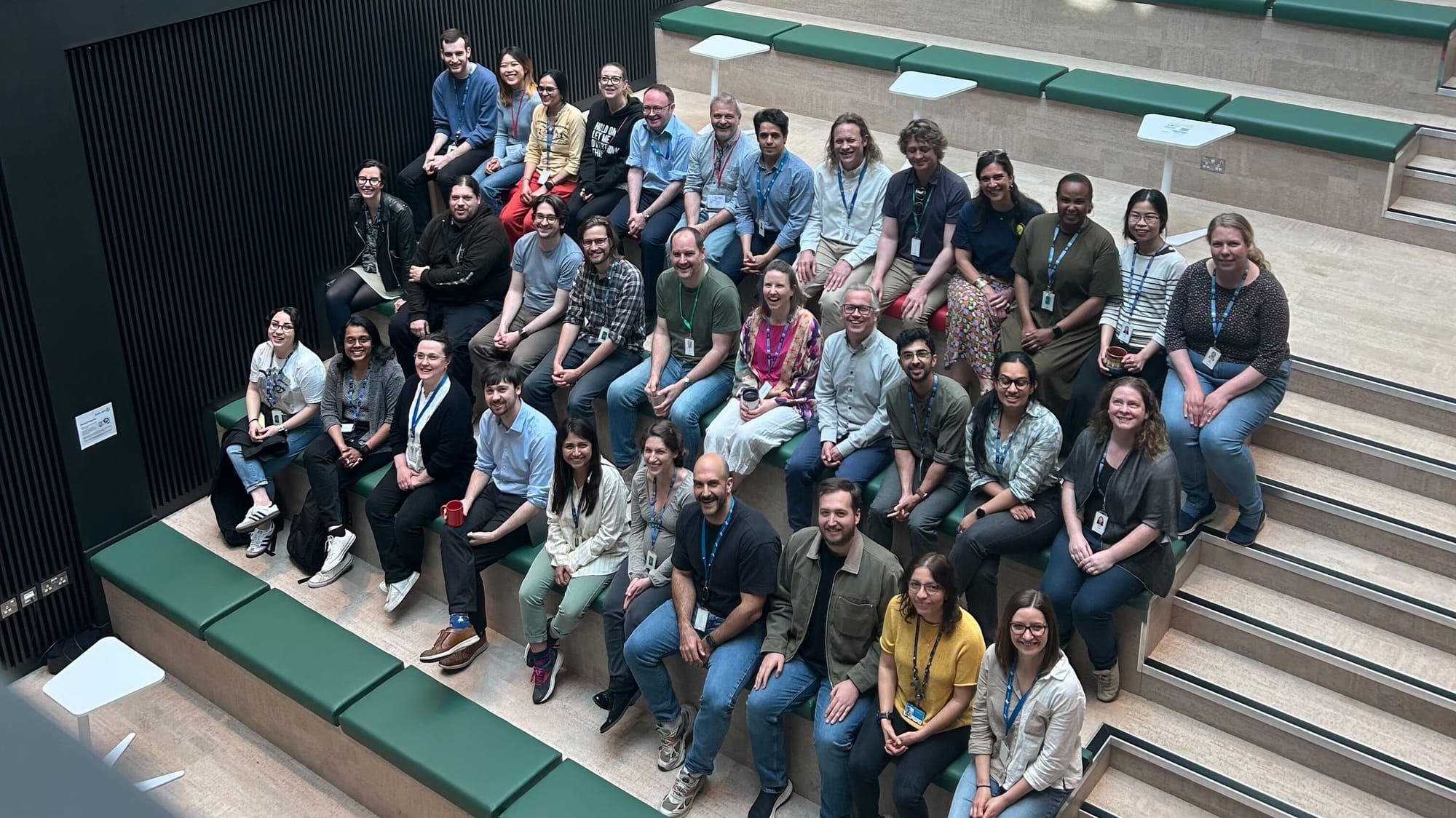
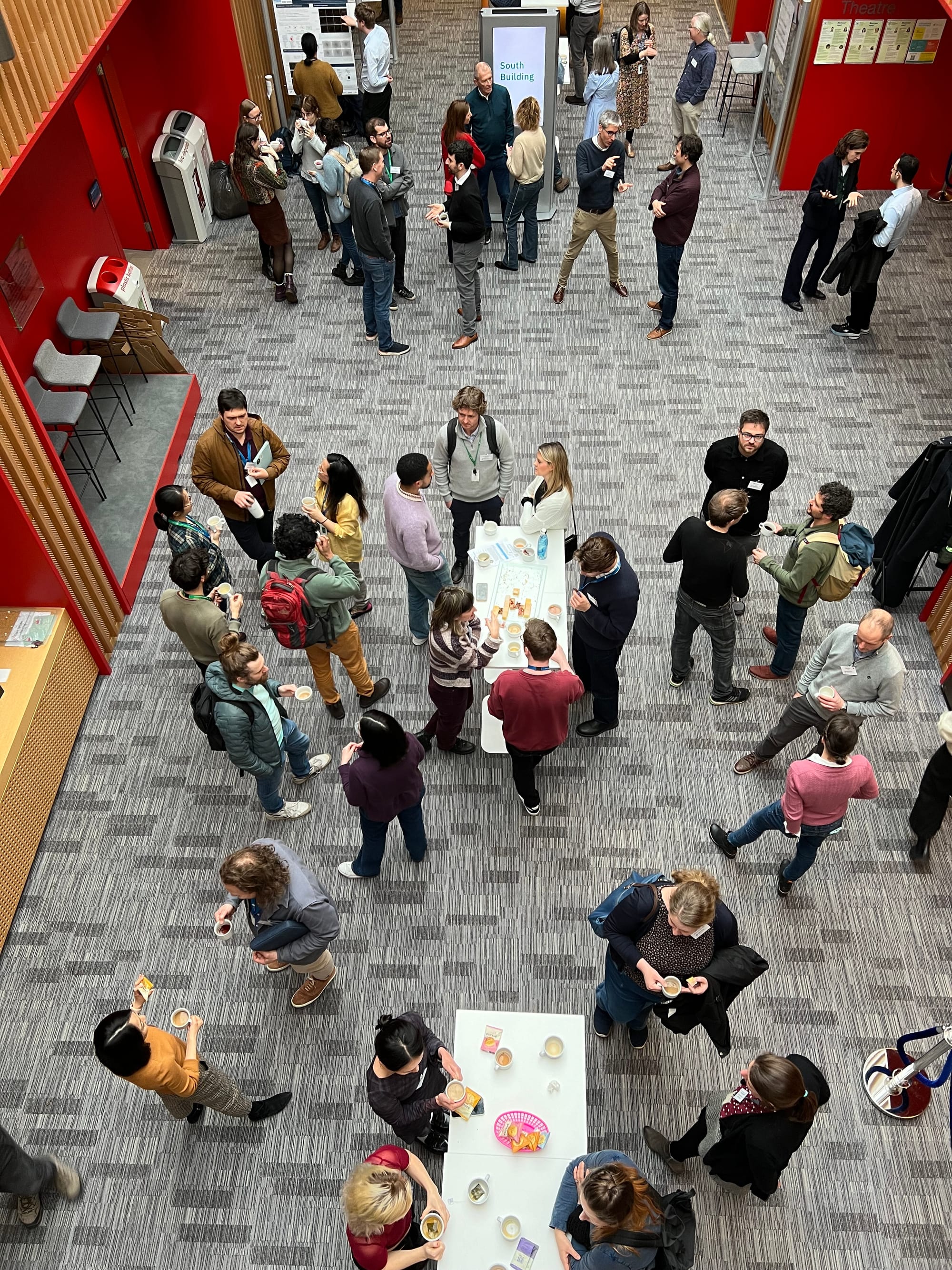
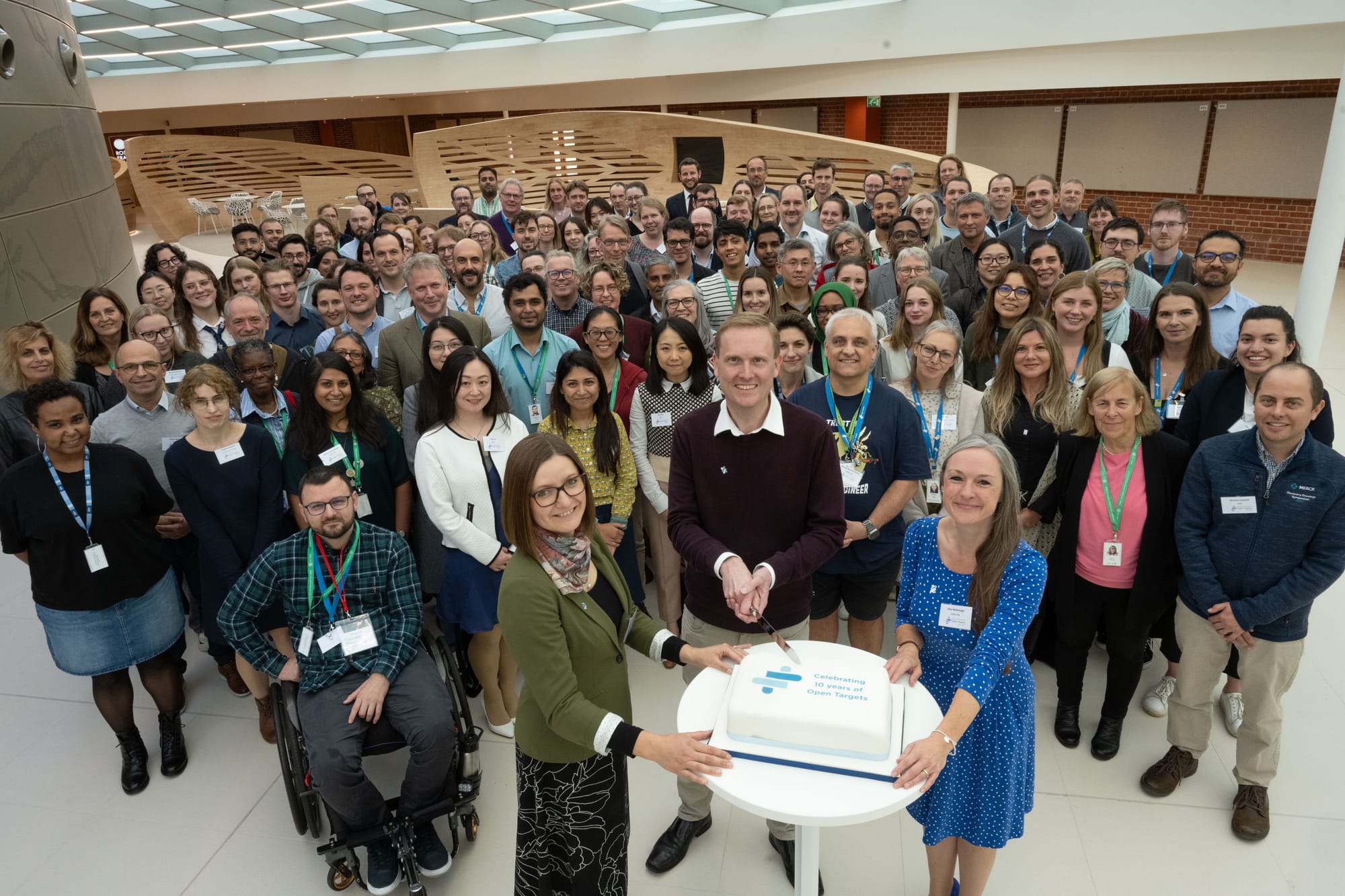
Clockwise from top left: Open Targets Platform 10th anniversary hackathon (Stuart Horswell | Open Targets); the first Ctrl+Alt+Del forum (Paris Litterick | Open Targets); Open Targets 10th Anniversary celebrations, October 2024 (Phil Mynott); Open Targets Symposium, February 2026 (Helena Cornu | Open Targets)
Projects progress iteratively, with different industry scientists contributing at key stages. This rotating expertise brings fresh perspectives while keeping momentum. As the consortium has grown, maintaining that continuous exchange has become a priority. Open Targets was established as a pre-competitive partnership, enabling members to share ideas without constraints—an uncommon model in drug discovery that fosters frank, constructive discussions.
“Industry partners tend to focus on the bigger picture rather than the finer details,” says Anneliese Speak, Open Targets project lead and Principal Scientist at the University of Cambridge. “They bring different perspectives and questions, which can subtly reframe how you approach a problem. But they can also offer very detailed scientific input, for example, on specific assays or methods.” This ongoing feedback makes Open Targets projects highly adaptable, allowing decisions to pivot quickly in response to new results or new techniques—a flexibility that is central to our collaborative model.
Looking to the future
Open Targets’ most successful collaborations are built on strong connections and regular communication between academic and industry partners at every stage of a project’s lifecycle. More than a decade after its founding, the consortium can now plan and deliver larger, more ambitious initiatives with high scientific impact—such as Open-IBD which will follow 1,000 IBD patients and 1,000 controls from diagnosis through the first years of disease and treatment, and NeuroImmune, an ambitious project using cutting-edge spatial transcriptomics to profile pathological changes in the brains of patients with neurodegenerative disease. By combining patient sample profiling with cellular perturbations, NeuroImmune aims to uncover mechanisms that could reveal new therapeutic opportunities.
In the next post in this series, Open Targets Science Director Gosia Trynka will explore how the research programme has evolved and where the science is heading next.
 Gosia Trynka